Safe Space Mapping: Build a Personal Safety Plan Fast
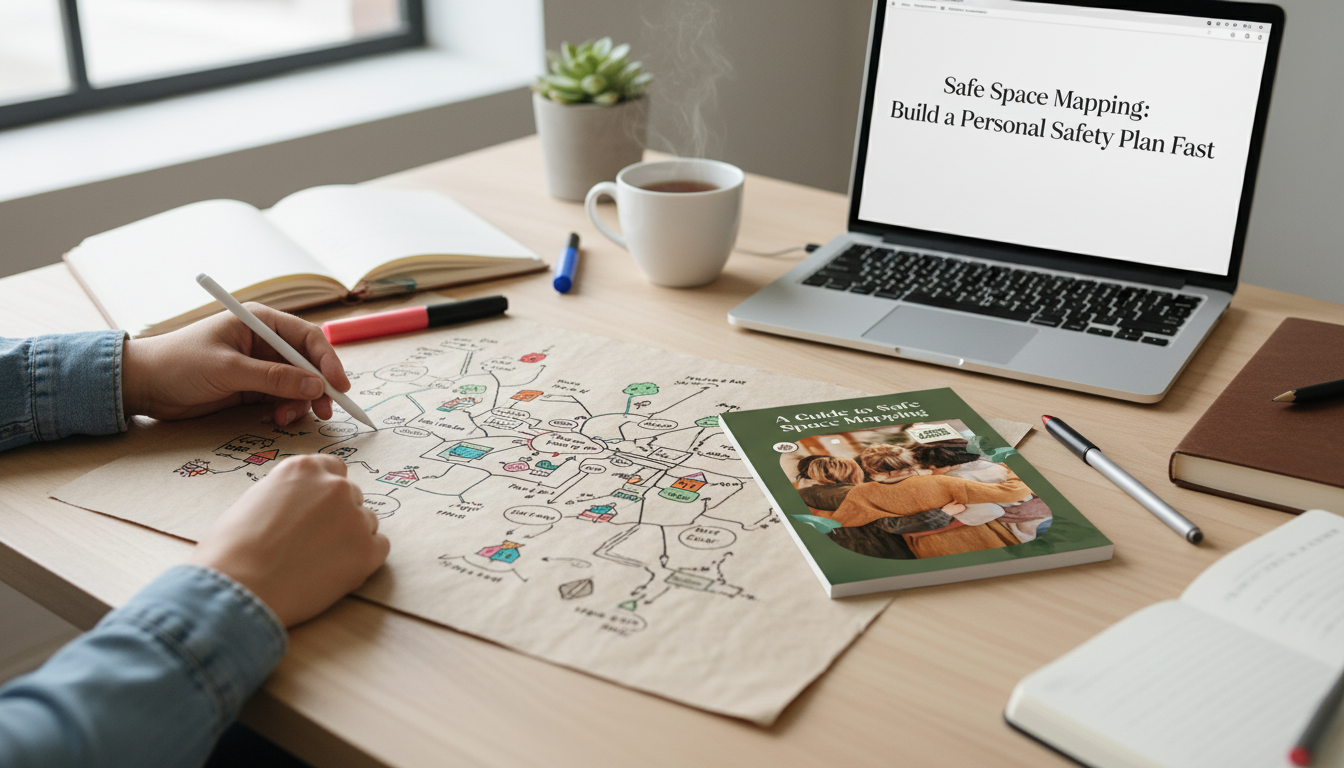
What “safe space” means in real life
A “safe space” is any option that reliably lowers risk and raises support when things feel shaky. That can mean physical safety (reduced chance of harm), emotional safety (less judgment, fewer triggers, calmer communication), and practical safety (clear access to help, transportation, money, or essential items). Importantly, safe doesn’t always mean comfortable—sometimes the safest option is simply the one that helps you regain control, stabilize, and make the next decision.
Different moments call for different kinds of safety: a quick reset when overwhelm spikes, privacy when you need to think, trusted companionship when you can’t be alone, professional support when symptoms escalate, or a clear exit route when a situation turns unpredictable. Safe space mapping works best when it expands choices, so you’re not relying on one “perfect” place that may be unavailable.
Core elements to map: places, people, and tools
Places
Map both obvious and overlooked locations: specific zones at home, discreet spots at work or school, public options like libraries, transportation hubs with staff presence, community centers, and “in-between” places such as a quiet stairwell, a well-lit lobby, or a familiar coffee shop where you can sit and regroup.
People
Include anyone who can offer support or intervention: friends, family, neighbors, coworkers, mentors, clinicians, hotlines, and community organizers. The goal isn’t to list everyone you know—it’s to identify who is steady under pressure and what kind of help each person can realistically provide.
Tools
Tools make your plan usable when your brain is tired: phone accessibility settings, emergency contacts, calming items, transportation methods, and a short list of financial/ID essentials. Add “time and access” notes for every option—hours, costs, required permissions, distance, and how quickly you can get there.
How to build a safe space map in 30–45 minutes
Start by choosing the scenarios that most often throw you off balance. Common ones include commuting, arriving home late, conflict in the household, burnout at work, intense social events, or online harassment. Then build your map in layers:
- Fast options (≤10 minutes): List 3–5 choices you can reach quickly (a nearby friend, a specific room, a familiar public spot).
- Stable options (30–120 minutes): List 3–5 options that provide longer support (counselor, community center, support group, quiet routine at home).
- Backup options (worst-case): List 1–2 options for immediate danger or medical risk (crisis line, urgent care, emergency services).
Next, add details that make the map actionable: addresses, entrances, who to contact, and what to say. A one-sentence script helps when emotions run high (example: “I’m not okay and I need a calm place to reset—can you stay on the phone with me for 10 minutes?”). Finally, identify barriers and workarounds: cost, mobility constraints, childcare, language, sensory overload, privacy concerns, or limited phone battery. Store the map in two formats—one private digital note and one small printed card.
Safe space mapping across environments
Home
Identify “low-conflict zones,” privacy boundaries, exits, and calming routines. Note where essentials live (charger, keys, meds, headphones, water) so you’re not searching during a tense moment.
Work or school
Map quiet rooms, supportive staff, reporting channels, and a plan for stepping away without escalation. A simple workplace script can be enough: “I need to step out for ten minutes and will return at 2:15.”
Community and public spaces
Online
| Category | Example options to list | Access details to record | When to use |
|---|---|---|---|
| Fast option (≤10 min) | Nearby friend, quiet park bench, library reading area | Hours, exact location, fastest route, backup route | Overwhelm, rising conflict, need to reset quickly |
| Stable option (30–120 min) | Counselor, community center, support group | Appointment steps, costs, required ID, transportation | Ongoing stress, processing an event, structured support |
| Emergency option | Local emergency services, crisis hotline, urgent care | Numbers, address, what to say, who to notify | Immediate danger, medical risk, threat escalation |
| Online safety option | Private account, moderated community, trusted admin | Privacy settings, block/report steps, screenshot process | Harassment, doxxing risk, unwanted contact |
Creating safe spaces: boundaries, cues, and design choices
Using the map when emotions run high
Keeping the map accurate and safe to store
Recommended digital guides (instant download)
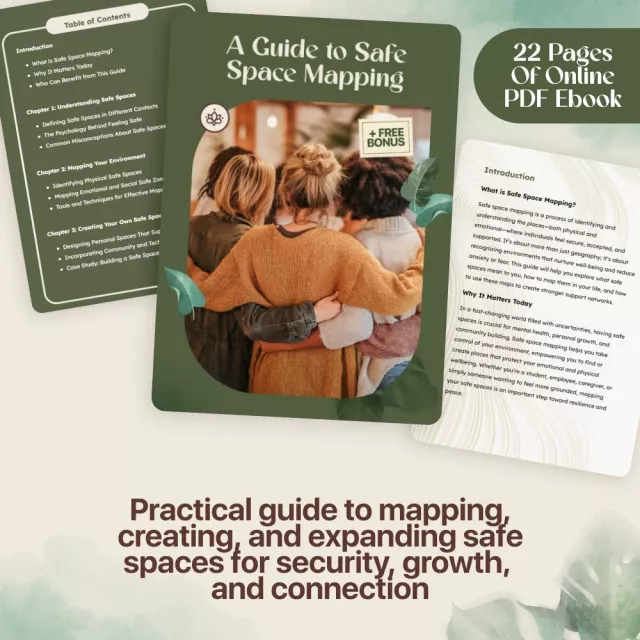
- A Guide to Safe Space Mapping | Digital Ebook on Understanding, Creating & Using Safe Spaces ($16.99) — designed to turn safety from an abstract idea into a usable system for daily routines, transitions, and high-stress moments.
- Travel Security & Scam Awareness Guide | Digital Safety Handbook for Tourists, Solo Travelers & Business Trips ($10.99) — a practical companion for days when you’re outside familiar routines and need added situational awareness.
When you need immediate or professional support
- SAMHSA National Helpline (treatment referral and information)
- 988 Suicide & Crisis Lifeline (24/7 crisis support in the U.S.)
- National Domestic Violence Hotline (support and safety planning resources)
FAQ
How is safe space mapping different from a general self-care plan?
Safe space mapping is built around concrete, decision-ready options—specific locations, people, routes, access details, and short scripts—so you can act quickly. A self-care plan often focuses more on general wellness activities that may not be accessible during high stress.
What if there are very few safe places available right now?
Start with micro-spaces and micro-actions: a single room corner, a short walk route, or a public resource hub like a library. Identify one trusted contact, build predictable routines, and expand your options gradually as access and support improve.
Should a safe space map be shared with others?
Share selectively based on trust and need-to-know. Many people keep a private full version and a simplified version for supporters that includes only what’s necessary to help in the moment.









Leave a comment