Playful vs Irritated Cat Body Language: Key Signs

How can I tell the difference between playful vs irritated cat body language?
The quickest way to tell is to look at the whole “body picture”—tail, ears, eyes, posture, and how your cat responds to pauses. Playful cats invite interaction and can easily switch gears. Irritated cats show “stop” signals that intensify if you keep pushing.
Playful cat signals
Play often looks bouncy and loose. A playful cat may crouch with a wiggly butt, then pounce or dash away, turning it into a chase game. Ears are usually forward or relaxed, whiskers neutral to slightly forward, and the body looks springy rather than stiff. The tail may be up like a question mark, swish gently, or flick during excitement, but it won’t usually lash hard side to side. If your cat takes short breaks and then re-engages—bringing a toy back, circling, or returning for more—those are strong “yes” signals.
Irritated or overstimulated signals
Irritation tends to look tight, tense, and less flexible. Watch for ears rotating sideways (“airplane ears”) or flattening, pupils suddenly dilating, and a stiff posture that stays locked in place. The tail is a major clue: sharp, fast lashing or thumping is often a warning. Skin twitching along the back, a low growl, or a quick head turn toward your hand can also mean your cat is done. Some cats give a “freeze” before they swat or bite—if you see a sudden stillness, stop touching and give space.
Quick at-home check: pause and see what happens
When you’re unsure, pause your hand or stop the game. A playful cat usually follows, re-initiates, or stays loose. An irritated cat often leans away, turns their head aside, flicks the tail harder, or leaves. Respecting the first warning prevents escalation.
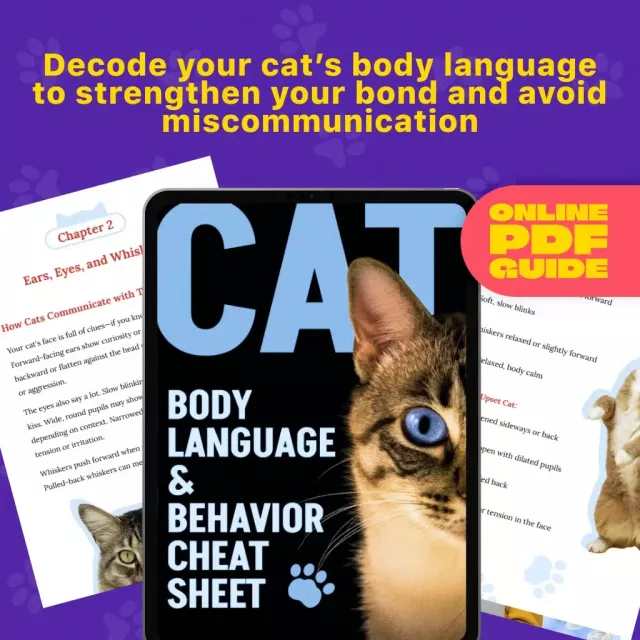
For a detailed breakdown of tails, ears, eyes, postures, and vocal cues, visit the full guide here: Printable Cat Body Language Cheat Sheet: Signals, Postures & Meows.
FAQ
Why does my cat swish their tail while purring?
Purring can happen during comfort or arousal, and a swishing tail often signals rising stimulation. If the tail starts lashing or your cat’s body gets tense, pause petting and let them choose whether to continue.










Leave a comment